Elanor Wang
IM Heung-Soon’s camera faces the sea. I follow his gaze. The sea is quiet and calm, the sky overcast. Behind us, CHANG En-Man is sharing the stories behind her works with the Kihaw Tribe.
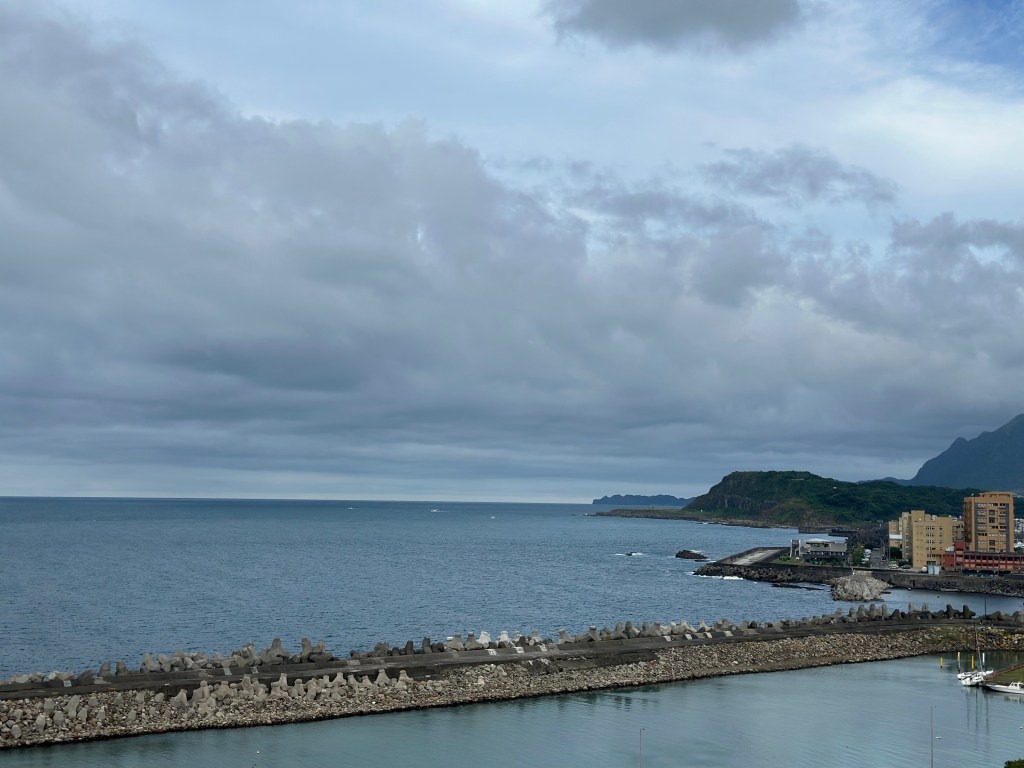
The popular image of Keelung, a city an hour’s drive from Taipei, is one of rain and moisture. Since air travel became the common way to reach other countries, few remember that this port city had once been the most important gateway to northern Taiwan. The Spanish once occupied it, building a small colony for trade and missionary work. Later, under Japanese rule, the city developed dramatically, the port was modernised, distant-water fisheries expanded, and the famous Kanzaiding Fish Market was born. After the Second World War, the Cold War era lifted Keelung’s economy. Bars, customs brokers and consignment shops opened one after another. The city flourished, drawing workers from across Taiwan in search of a new life.
Yet it all lingers only in memory.
Today, though ferries and container ships still come to Keelung, the port feels too small for the vast vessels of our time. Keelung has become a symbol of old-fashioned romance. For the younger generation, it lives in the image of SHU Qi, dressed in Jean Paul Gaultier, dancing on Zhongshan Bridge in Millennium Mambo. For food lovers, it is a place of rice sausages, chikuwa and offal. For me, I still carry my FUJIFILM QuickSnap, wandering through cafés in the traditional market, the stylish Tiger Mountain Car Park (虎仔山迴車塔), and the winding streets, capturing traces of an old-world charm.
Keelung Ciao Art is an art festival organised by the city’s Bureau of Culture and Tourism. Its purpose is usually to promote tourism through temporary art events. However, in the 2025 edition, curators CHEN Hsi and KANG Jeauk placed works not only in museums and galleries, but also across the city, hoping visitors could read Keelung’s history and society through art, and engage with local communities beyond the surface of tourism.
When I speak with a staff member from the Bureau, he admits it has been a great challenge to install works within local neighbourhoods rather than in white cubes. Countless conversations and negotiations lay behind each piece.
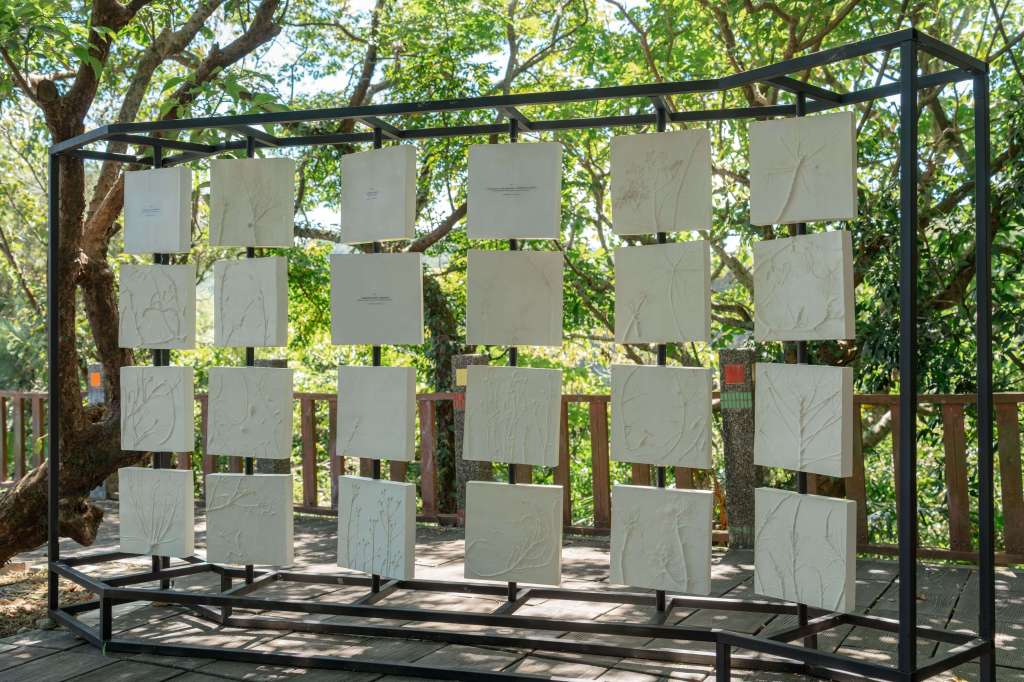
Some of the conversations were particularly interesting. Paiwan artist CHANG En-Man’s work Botanical Transfer Artistry — Cultural Field Notes of Kihaw, relates to the local Amis people who migrated from Hualien in the 1960s to work in Keelung’s fishing industry. They built their homes from abandoned timber and canvas. Yet Bachimen, where they settled, was a restricted area. The government tore down their houses by day, and they rebuilt them by night, again and again. By the 1980s, as the fishing industry declined, many turned to construction and transport work, later moving into public housing. Although the community no longer lives together, some still preserve their traditional culture. In this work, CHANG invited members of the tribe to collect and make rubbings of plants that hold meaning in their culture, and installed the resulting pieces on the observation deck where the annual harvest festival is held every July.
“When they collected them, I asked what these plants meant in their culture,” CHANG says. “But sometimes they just replied, ‘It’s pretty.’” This exchange reveals that Botanical Transfer Artistry is not only about the final result, which isn’t very pretty or delicate. Its essence lies in the conversations, in the process of reflecting on what tribal culture and memory mean today.
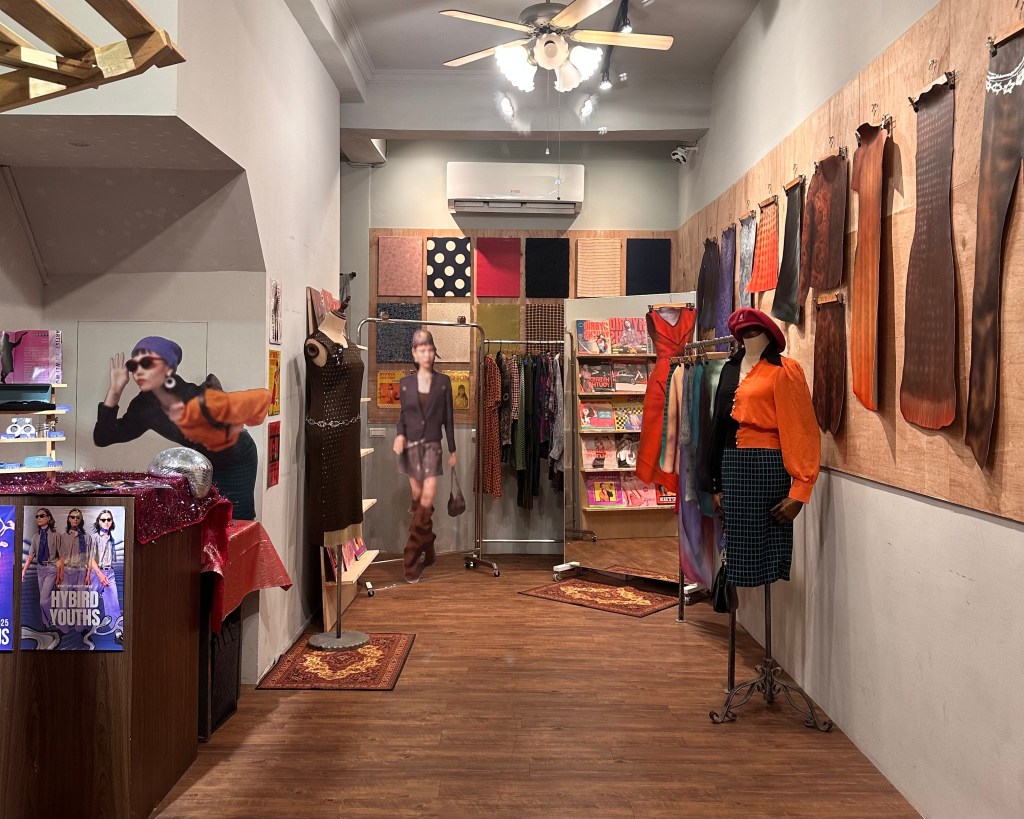
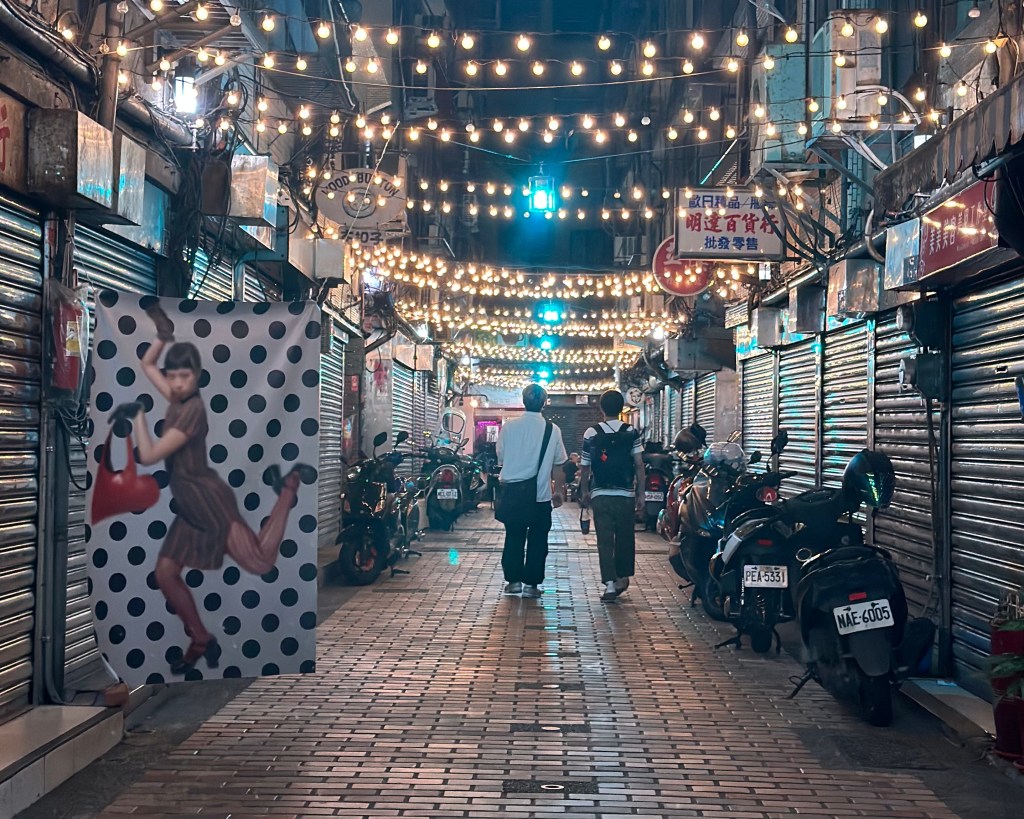
I listen to WU Pu-Wei’s stories with the local community as we walk the streets together. Some relationships with the community are subtle. Wu’s site-specific project, Hybrid Youths, rebuilds a former consignment store as a Y2K-style select shop. Consignment stores are a distinct feature of Keelung’s history. Under martial law, imported goods were hard to come by, and stores bought items like jeans and watches from foreign soldiers and sailors and sold them to locals. Today, consignment stores function like foreign-style select shops. Wu first planned to rework clothes from these stores, echoing a revival of early-2000s fashion. When costs proved too high, the project shifted to banners and nearby windows, forming a temporary shopfront that bridges aesthetics and geography. Even so, he continues to negotiate with neighbours over how the banners look and where they may stand.
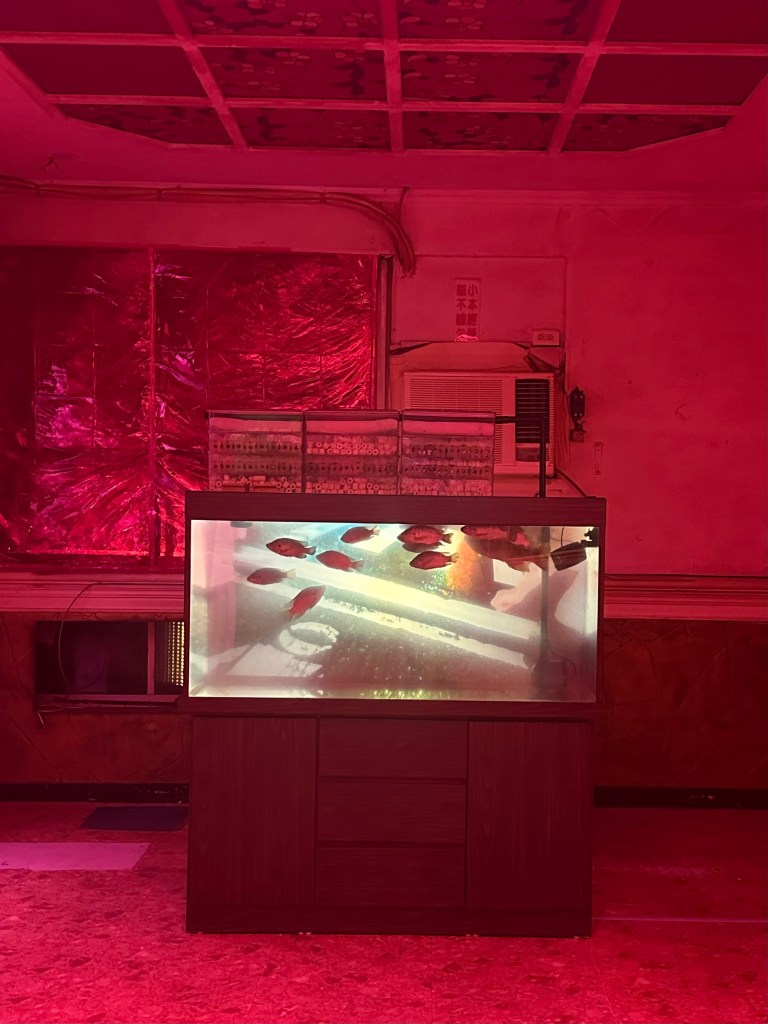
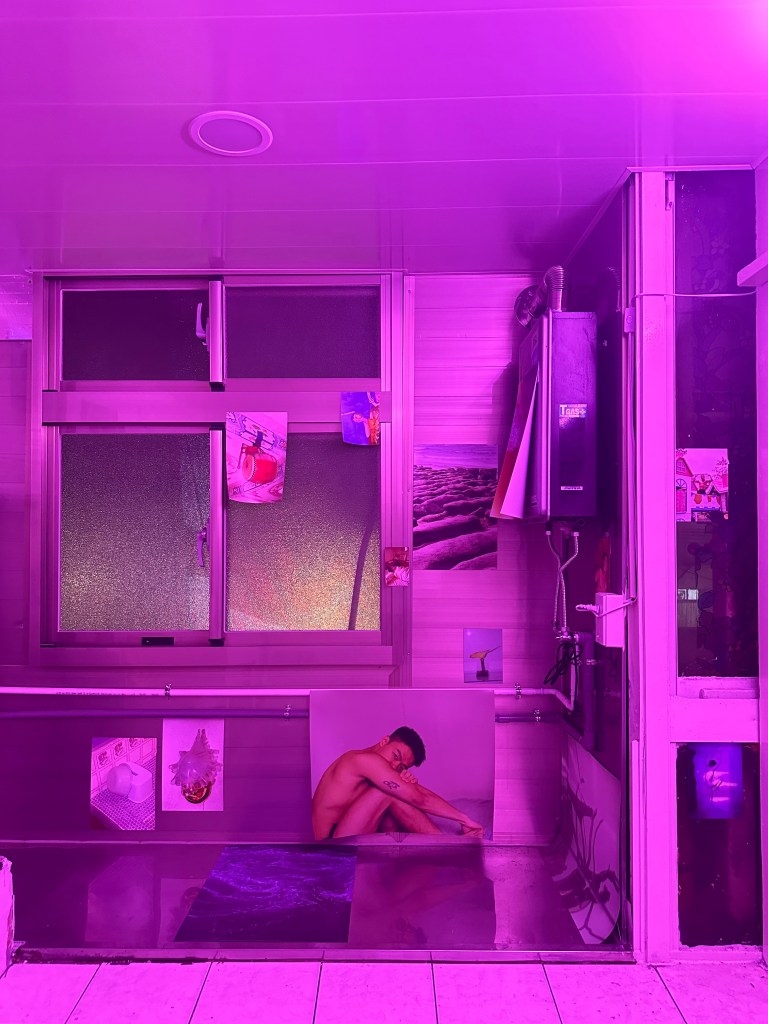
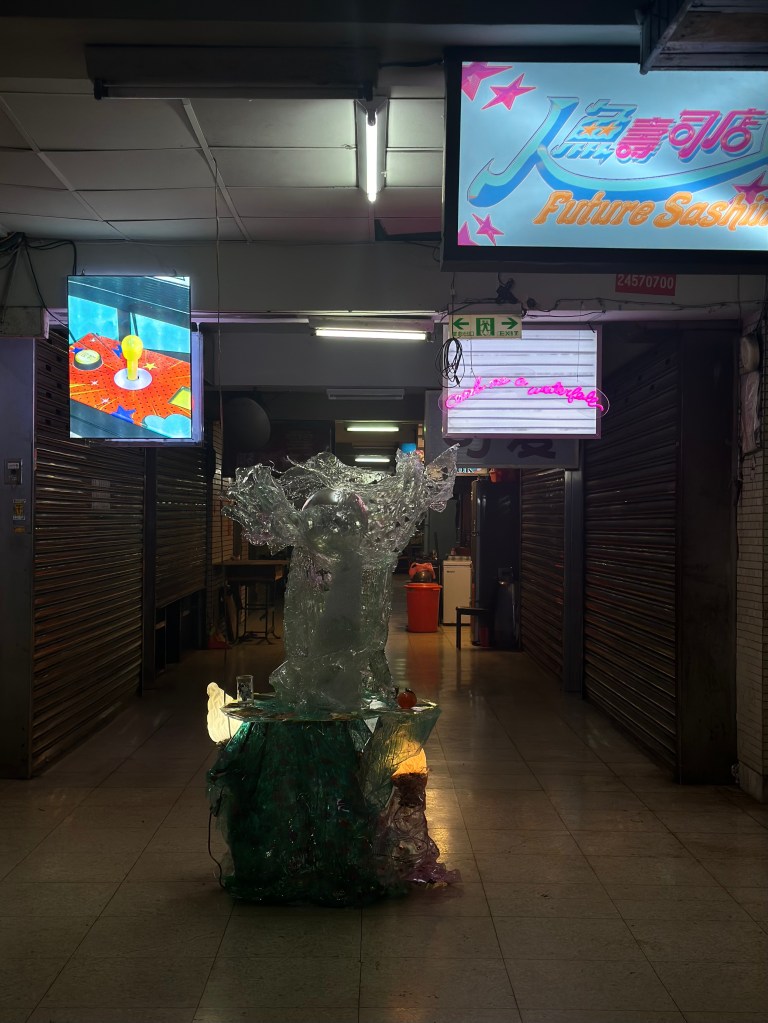
Another project takes place in the local community: Future Sashimi, in Zhishan Building, a hub of bars and karaoke. The LGBT+ artist group Homo Pleasure Collective transforms an old ballroom into a space of sculpture, photography, and fish-tank video. Their style is bold and provocative, perfectly complementing the original mosaic tiles and decorative windows. The works extend into the hallways and staircases of the building. I ask if the style and content are too provocative for the local community. But what truly matters to neighbours is not the nudity, but where and how to install the work. Though these conversations are never presented to audiences, they are actually the real pleasure of the local art festival.
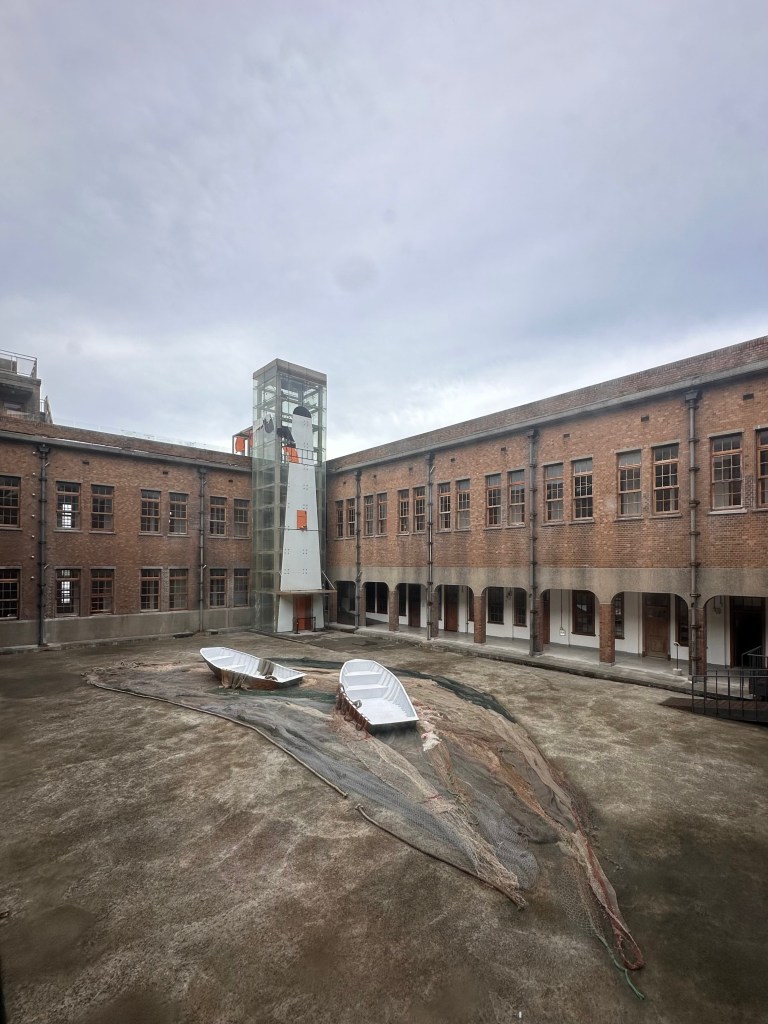
LAI Yen-Hsun, Dongyi, and LIN Pei-Ju’s work, lion △ moon △ sea, reveals the hidden history of Keelung, focusing on the Korean community. During the Japanese era, over 3,000 Koreans came to work in Taiwan. After Japan’s defeat, there were not enough ships to return them home, and the outbreak of the Korean War meant that 358 Koreans ultimately remained stranded in Keelung. They never applied for Taiwanese citizenship, waiting for the chance to return to Korea. To reflect this history, the artists built stranded ships on land and organised dance rituals, evoking both condolence and the scars of history.
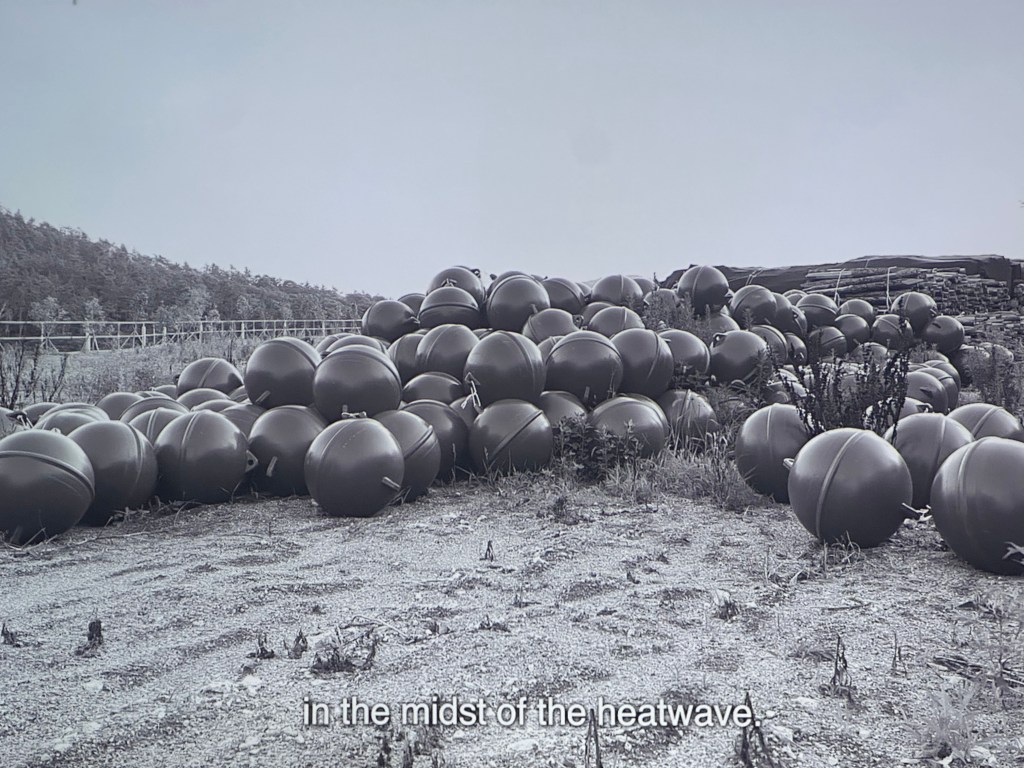
The South Korean artist IM Heung-Soon’s work, the Waves, links the Yeosu–Suncheon Rebellion, Korea’s participation in the Vietnam War, and the Sewol Ferry Disaster. All these events feature national naval forces at sea, yet each ends in tragedy. He transforms these sorrowful histories into video art, focusing on the mediators, neither victims nor oppressors. His poetic gaze rests on the calm ocean, while the stories beneath remain unbearably painful. The distance of the mediators’ perspective mirrors his aesthetic: calm and still, with all tension contained in the tragedy itself. IM also notes that during Korea’s involvement in the Vietnam War, naval ships were once stationed in Keelung Port.
When IM installed his work, he also wandered through Keelung. Curator Chen Hsi told me that IM had a conversation with Miss HUANG, the only remaining Korean immigrant in Shengli Lane, once an important community for Koreans. When they said goodbye, Miss Huang gave Im a glass of handmade kimchi, which he later shared with the artists and curatorial team at dinner.
For me, that kimchi serves as a symbol of Keelung Ciao Art. A local art festival is not only about creating new perspectives of Keelung for outsiders, or producing and commissioning new works in the physical world. It should also serve as a platform, a process through which people build relationships.
 Muainn
發表留言